Fire stopping that holds the compartment line
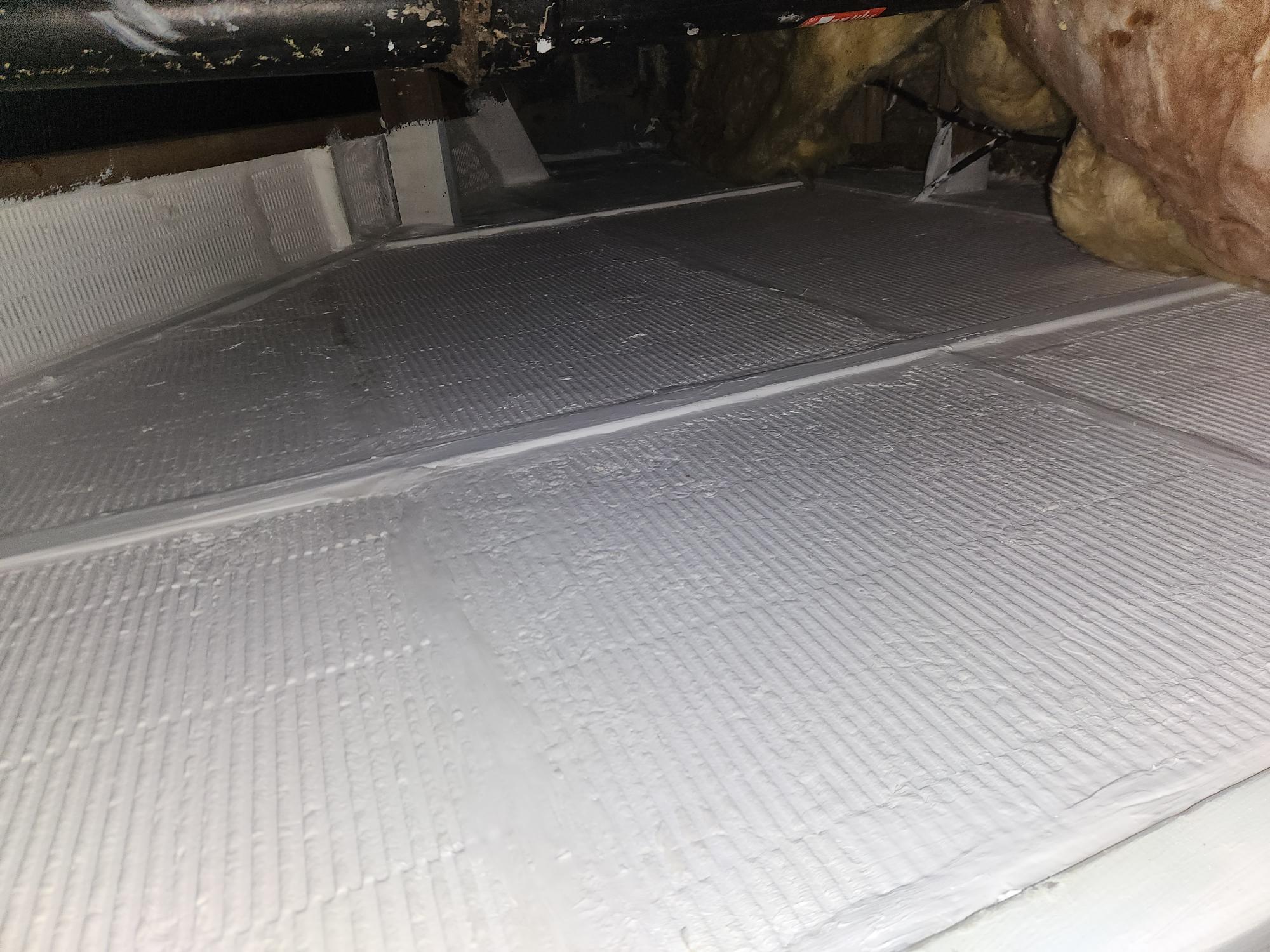
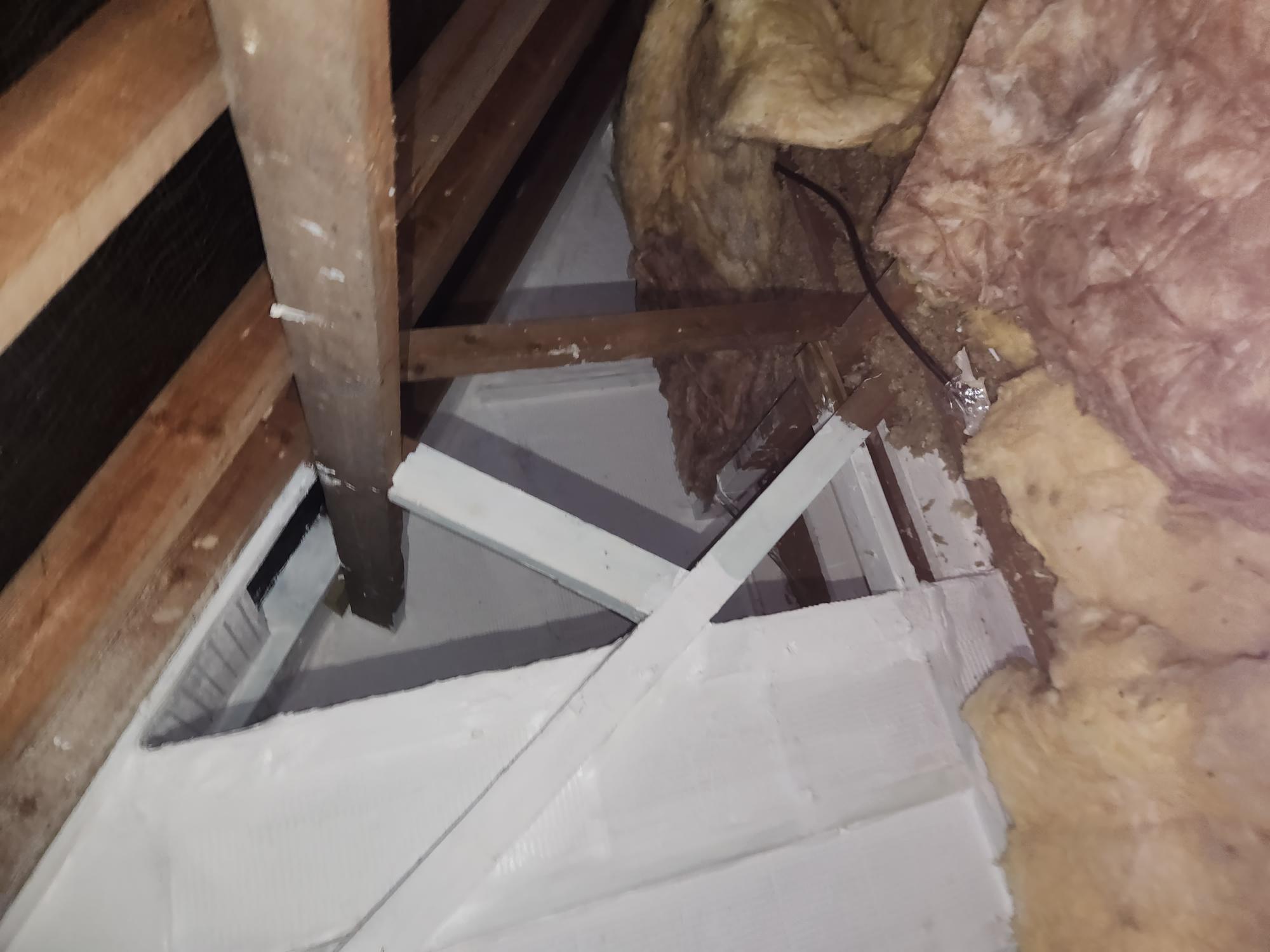
Sealing the penetrations, joints and voids where services pass through fire-resisting walls and floors — installed to the manufacturer's tested detail, photographed before and after, and recorded against their location.
A barrier is only as good as the holes in it.
Every wall and floor that forms a fire compartment is designed to hold fire back for a set period — thirty minutes, sixty, a hundred and twenty. That performance assumes the barrier is unbroken. In a working building it rarely is.
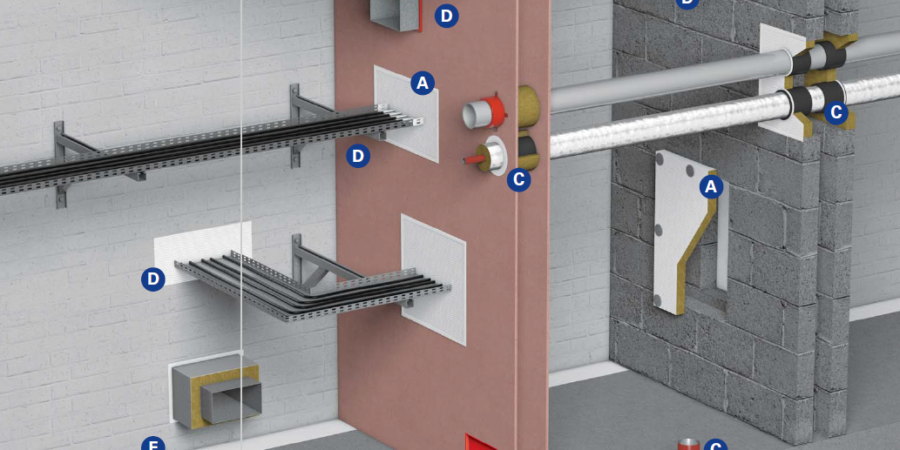
Cables, pipes, ducts and trays pass through it. Ceilings are opened up for maintenance. New services arrive years after handover, installed by trades who were never asked to reinstate anything. Each unsealed penetration is a route for fire and smoke to take, and it will take it long before the compartment itself fails.
Fire stopping is the work of sealing those penetrations, joints and voids so the barrier performs the way it was designed to.

Every breach has its own tested solution.
There is no universal sealant. What goes into an opening depends on the substrate, the services passing through it, the size of the gap and the rating the wall has to achieve.
Installed as tested, not as improvised.
A fire stopping product only carries its rating in the exact configuration it was tested in: that substrate, that thickness, that annular gap, that fixing. Substitute one element and the tested evidence no longer applies to what is on your wall.